Where to Drift in Argentina: Circuits and Community
 By Dmitrii McCarthy
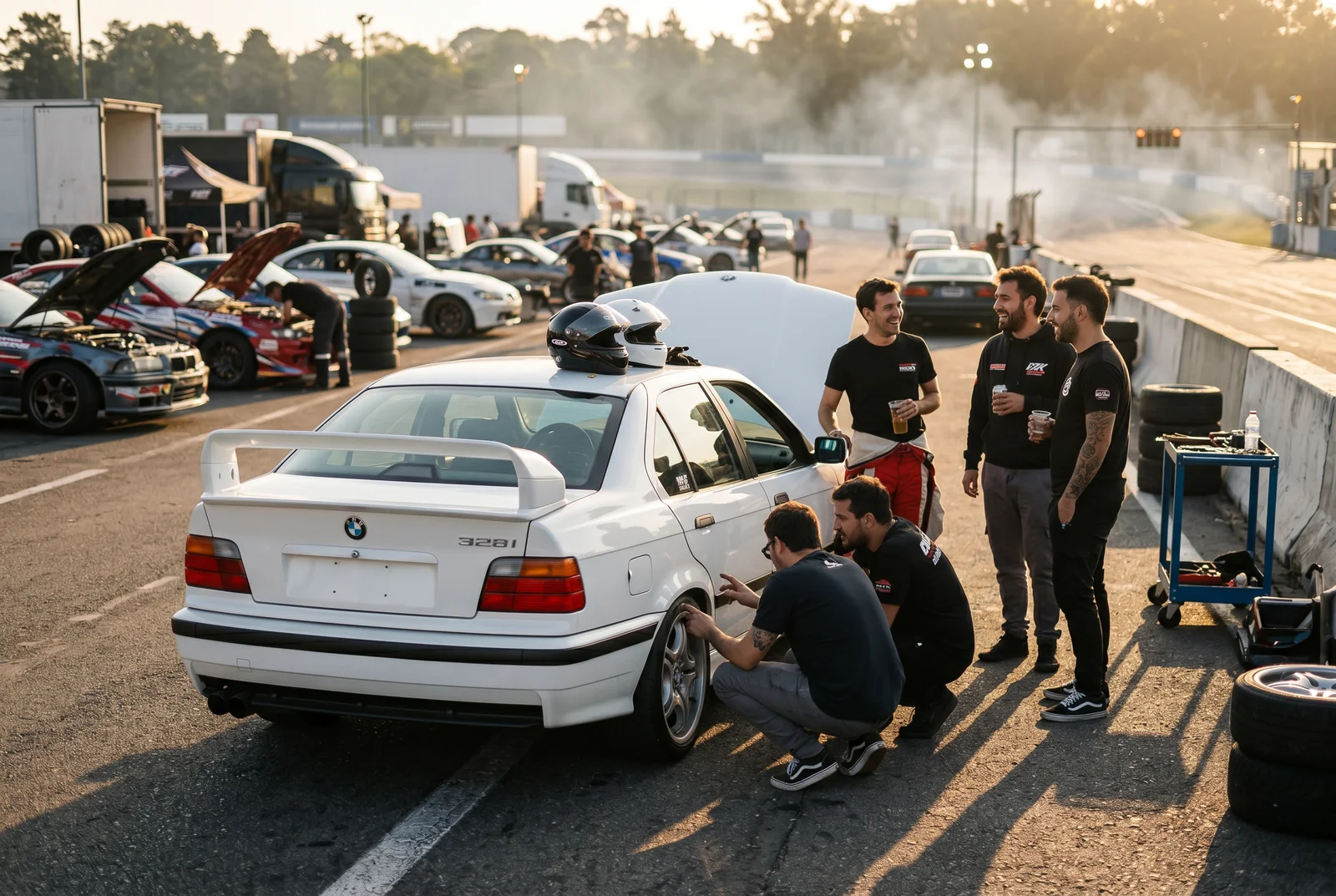
Argentina has a drift scene of its own

If you think drifting is only a Japan or USA thing, think again. Argentina has a drift community with international-level circuits, events throughout the year and drivers who compete in a South American championship. And the best part: getting in is much easier than you think.
In this guide we cover everything: where you can train drift in Argentina, what events exist, how to connect with the community and how to take your first steps on track. Whether you are reading this from Buenos Aires, Cordoba, Rosario or anywhere else in the country, here you will find your path to the asphalt.
Circuits for drifting in Argentina

The circuit-by-circuit detail, with the length, the latest open session and the source of each fact, is in the catalog of Argentine circuits for drift (verified as of October 3, 2026); if you are starting from Buenos Aires, the options by distance are in where to drift near Buenos Aires. The essentials: the Galvez, in the City, is under works until the April 2027 MotoGP; Track Day Argentina published 2026 sessions at the Mouras, Rosario, the Cabalen, San Nicolas, Termas de Rio Hondo and Villicum, but those are sessions to lap in your own car, not drift events; and to drift at a circuit you need a drift event run with the circuit's permission, like the ones in the 2026 calendar.
Important: drifting on public streets is illegal and dangerous, and it can end with your car impounded or a criminal case; the rules that apply, article by article, are in that same proximity guide. To practice, the place is a closed track.
Track Days: how they work and how to sign up

What is a track day
A track day is an organized event where you can take your car to a circuit and use the track in a controlled manner. It is not a competition — it is free practice where everyone goes at their own pace. There are marshals, an ambulance on standby, and basic safety rules. Depending on the organizer, participants may be split into groups by skill level: beginner, intermediate, and advanced.
Requirements to participate
Requirements vary by organizer, but in general you need: a car in acceptable mechanical condition (brakes, tires, fluids checked), a certified helmet, long-sleeve clothing and closed shoes. For drifting, what matters most is the controlled environment: a private, closed track, a drift instructor beside you on every lap and a helmet. Each organizer sets its own additional rules, so it is worth checking before you sign up.
The cost depends on the organizer: Track Day Argentina publishes each session's fee in pesos and raises it in stages, so check the current price on its site before you sign up.
Track day organizers in Argentina
The most visible track day organizers are:
Track Day Argentina (TDA): on the road since 2010, according to its Instagram. In 2026 it published sessions at the Mouras, Rosario, the Cabalen, San Nicolas, Termas de Rio Hondo and Villicum, with groups by level and a mandatory drivers' briefing. These are sessions to lap in your own car: it does not announce drift.
Drift events: they are put on by teams and organizers such as Kamikaze Drift Team, which runs the Drift Day at El Picodromo on Saturday, December 5, 2026 (moved from October 31), and they are almost always announced on Instagram. Who organizes what, with sources, is in the directory of the 2026 calendar.
The drift community in Argentina: how to connect

Instagram: the heart of the community
The Argentine drift community lives on Instagram. That is where practice videos are posted, events are announced, parts are sold and groups are formed for track days. Following the right accounts is the fastest way to stay on top of everything happening in the scene.
Some accounts worth following: track day organizers, local drivers who compete, and shops specializing in BMW and drift car parts. The community is small but very active, and people are genuinely open to newcomers. Do not hesitate to reach out with questions — most experienced drivers are happy to help.
WhatsApp and Telegram groups
WhatsApp and Telegram groups exist where the community shares information about events, car and parts sales, and coordinates track day outings. The best way to get into these groups is to attend a track day and talk to people. In a single day on track you will meet drivers, mechanics and enthusiasts who will invite you into the groups. The drift community in Argentina is one of the most welcoming in motorsport — showing up with the right attitude is all it takes. There is no public directory of these groups: you almost always get in because someone you met at an event adds you. That is why showing up in person is the step that unlocks everything else.
The unwritten etiquette: do not be "that guy"
Every small community has rules nobody writes down but everyone respects, and in a scene where everyone knows each other a bad reputation travels fast. The basics:
- Do not act like an expert on day one. Listen more than you talk: nothing goes down worse than the newcomer with an opinion on everything.
- Respect other people's timing. If a driver is getting ready to go out on track, it is not the moment for your long chat. Wait until they are back in the pits.
- Offer help before asking for favors. Handing over a tool or helping push a car into the pits opens more doors than any message.
- Never drift on the street. Besides being illegal and dangerous, it is the fastest way to get the serious community to close its doors on you. Drifting happens on a circuit or a closed track, and people who street race on public roads are not part of this scene.
Events and competitions
Argentina has organized drift competitions, with categories for advanced and professional drivers: that is how Drift Sudamérica split them in 2025. Some rounds bring in drivers from neighboring countries: the Potrero Drift Race of April 2026, in San Luis, was won by Chilean driver Sebastián González. Attending as a spectator costs a ticket, which each organizer sells through its own channel (Kamikaze Drift Team, for example, through Passline), and it is an excellent way to see the level you can reach and meet people in the community.
This year's dates, with each series and its organizer, are in the 2026 calendar of drift events and championships in Argentina.
The real progression: class, track day, amateur, pro
If your goal is to compete, it helps to know what the road looks like so you do not get frustrated. It has four steps:
- 1. A class with an instructor. You learn the fundamentals (throttle, countersteer, starting and holding the slide) in a prepared car, on a closed track, with the instructor beside you. That is where you find out whether drifting is for you.
- 2. Track days, the first months. Practice on a circuit, at your own pace and with your own car. This is where people in the scene get to know you, event after event.
- 3. Amateur, after about a year. Once you link corners with ease, you sign up for the amateur categories of the local series. Getting here takes at least a year of consistent practice.
- 4. Pro. The level you see in the videos: extreme angles, tandem and very powerful cars. It comes after years on track.
Nobody jumps from the couch to pro level, but the first step, going from spectator to participant, is far more accessible than it looks from outside. The steps from a class to your first amateur round are in how to become a drift driver in Argentina.
How to start if you do not have a car

Drift classes with car included
The easiest way to start is to take lessons at a drift school that provides the car. At TROMPO we offer classes from $300 USD (≈ $504.000 ARS) with a prepared BMW E36 328i, a drift instructor and track access. No prior experience, no car and no equipment needed — everything is included. If you are starting in the capital, see the class options to learn in Buenos Aires.
In a 30-minute introductory class you will learn the fundamentals: throttle control, counter-steering, and how to initiate and hold a slide. It is enough to know whether drifting is for you before investing in your own car. Many people who take that first class come back the following week for more.
Extra practice: more classes or your own car
If you already have basic experience and want more practice, there are two paths: more class hours in our BMW E36, always with the instructor beside you, or open track days with your own car. With ours there is no track insurance: if something breaks through misuse, you pay only the damage actually caused and proven, as the contract says. It is the way to practice without having to buy, prepare and maintain your own car.
Buying your first drift car
If you decide drifting is your thing and want your own car, the BMW E36 is a logical base: rear-wheel drive, a six-cylinder engine and parts you can find. On October 3, 2026, the 1993 to 1997 325i and 328i listed on Mercado Libre were asking 10,000 to 27,900 USD (≈ $16.800.000 to $46.872.000 ARS); the listing counts and the import rules are in BMW E36 or Nissan Silvia. Add the preparation on top, starting with the differential.
E36 parts are relatively easy to find in Argentina — there are specialist importers, wreckers and a large BMW community. You will not face the months-long wait for a part that you would with less common cars.
Monthly budget for drifting in Argentina

If you have your own car, a rough estimate of the monthly cost to practice drift (ours, not a price survey) is:
Track day (1-2 per month): $100-400 USD (≈ $168.000-$672.000 ARS)
Rear tires (changed every 2-4 sessions): $200-400 USD (≈ $336.000-$672.000 ARS)
Fuel: $50-100 USD (≈ $84.000-$168.000 ARS) per session
Preventive maintenance: $100-200 USD (≈ $168.000-$336.000 ARS) per month
Monthly total: $400-1,100 USD (≈ $672.000-$1.848.000 ARS)
If you do not have a car and take classes at our school, you pay per class: 300 USD (≈ $504.000 ARS) for 30 minutes or 500 USD (≈ $840.000 ARS) for 60, with zero maintenance, tire or fuel expenses on your side. For someone just starting out, it saves buying and preparing a car before you know whether drifting is for you.
Six tips for your first track day

1. Arrive early. The safety briefing is mandatory and if you miss it, you do not drive. Arriving early also gives you time to walk the track and learn the corners before you are behind the wheel.
2. Bring water and food. Circuits often have a snack bar but not always. A track day is long and physically demanding — dehydration kills focus and focus keeps you safe.
3. Talk to everyone. The drift community is incredibly open. Experienced drivers are always willing to give advice and share their knowledge. Do not be shy about asking — the worst that can happen is they are busy. Most of the time they will happily walk you through a corner or explain a technique.
4. Do not try to impress. Your first track day is for learning, not showing off. Drive slowly, feel the car, and increase speed gradually. The drivers who progress fastest are the ones who start with humility and focus on the fundamentals.
5. Record everything. Mount a GoPro on the windshield or ask someone to film you from the side. Reviewing footage afterwards is the single most effective way to spot your mistakes and improve. What feels right in the car often looks very different on video.
6. Check the car before you go. Brakes, tires, oil level, coolant level. A mechanical problem on track can ruin your day and be genuinely dangerous. Five minutes of checks in the paddock can save you a blown engine on the main straight.
When to go: in Argentina you can drift all year round. Summer (December to February) brings strong heat, so it is best to drive early in the morning or late in the afternoon and bring water; autumn (April to June) and spring (September to November) are the most comfortable seasons for the driver.
There are circuits in 17 provinces and the City, track days with a public calendar and a community that welcomes anyone who shows up ready to learn, whether you are in Buenos Aires, Cordoba, Rosario or any other city. And if you are starting from zero, begin with the guide to learning to drift in Argentina.
The only question is: when are you going to take your first sideways lap?
See the real options to learn drift in Buenos Aires and the definitive guide to starting drifting.
If you want to start with an instructor and car included, check our drift classes.
Frequently Asked Questions
What payment methods do you accept?
To book a class you leave a 50% deposit by bank transfer; the rest is paid at the track on the day of the class: cash in USD or pesos, bank transfer or cryptocurrency (USDT). Coordinated via WhatsApp.
Are there group classes?
For two people there is the shared hour: 60 minutes, 30 at the wheel each, for 500 USD (≈ $840.000 ARS), always with the instructor beside you. For bigger groups or companies, message us on WhatsApp and we will work it out.
How long does it take to go from beginner to competing?
At least a year of consistent practice to reach the amateur categories. The first slides come in your first class; linking corners with ease takes several hours on track spread over months, and the pro level you see in videos comes after years.