How Much Does a Drift School Cost in Argentina? The Real Price, Explained
 By Dmitrii McCarthy
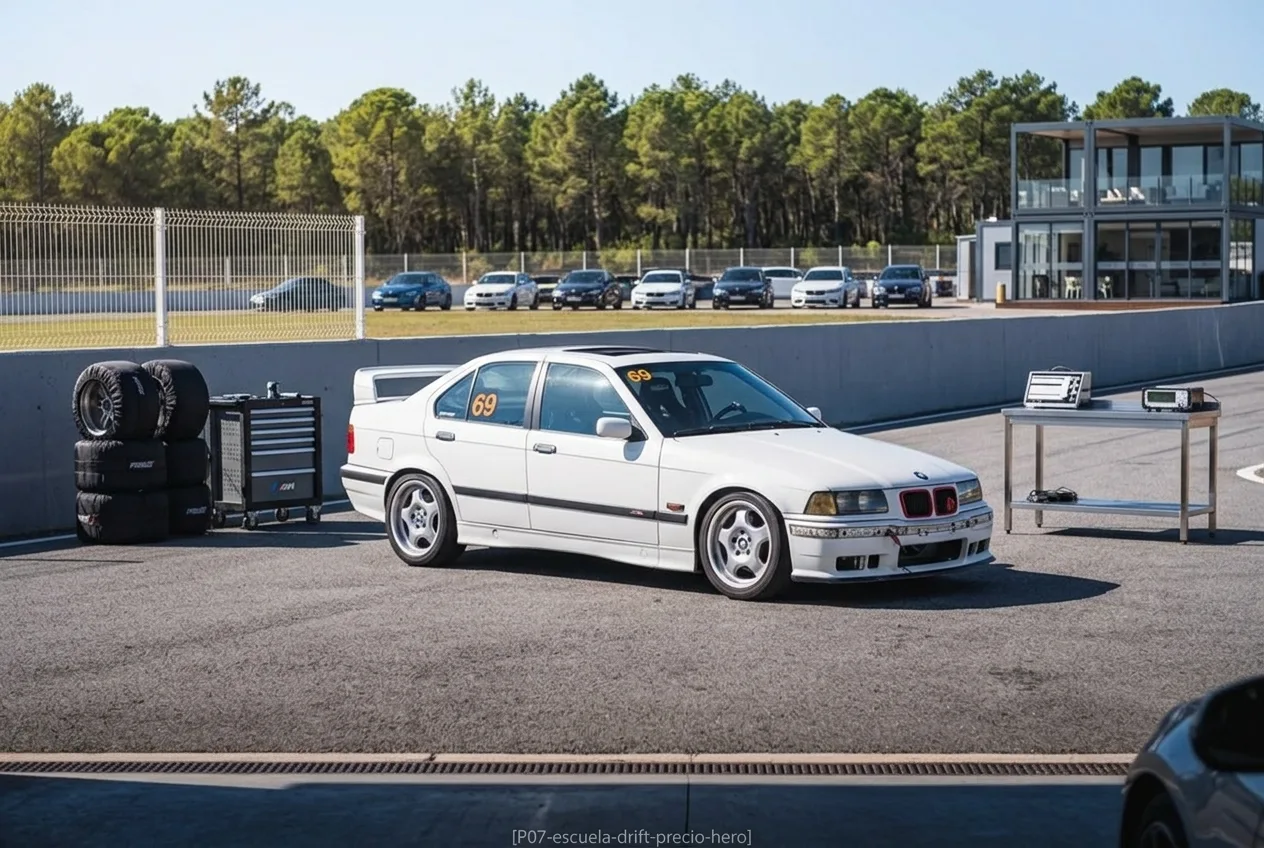
How much a drift school costs in Argentina, no spin
If you are researching prices before deciding, the short answer is this: in Argentina, learning to drift with the car included moves within a range, not a single number. A single class runs around 300 to 500 USD depending on duration and what it includes; a full 5-session course, built to actually progress, is close to 2000 USD. An open track day costs less, but it is a different thing: you bring your car and there is no instructor beside you.
This article is for understanding the range and the why. It is not our exact class price list — that lives on a separate page, and we link it at the end so you do not have to guess. Here we explain what makes a drift school cost what it costs, what the real options are in the Argentine market, and what you should expect included before spending a peso.
One number to orient you: our closed private track is in the outskirts of Buenos Aires, and the class car is a BMW E36 328i, rear-wheel drive, prepared for drift, with torque to spare to break the rear axle loose. If after reading you want the exact number, message us on WhatsApp +54 9 11 6833-3342 in Buenos Aires and we will give it to you straight.
Why a drift school costs what it costs
Drift is expensive to run, and it is not a trick to inflate the price. It is the motorsport discipline that burns the most consumables per minute. Once you understand the real costs behind a class, the number stops looking arbitrary.
The number-one cost is tires. Drifting is, literally, burning rubber: the rear axle is sliding the whole time. A set of rear tires in Argentina costs between 200 and 300 USD, and a serious drift session burns 1 to 2 sets. That alone is a cost floor no serious school can dodge.
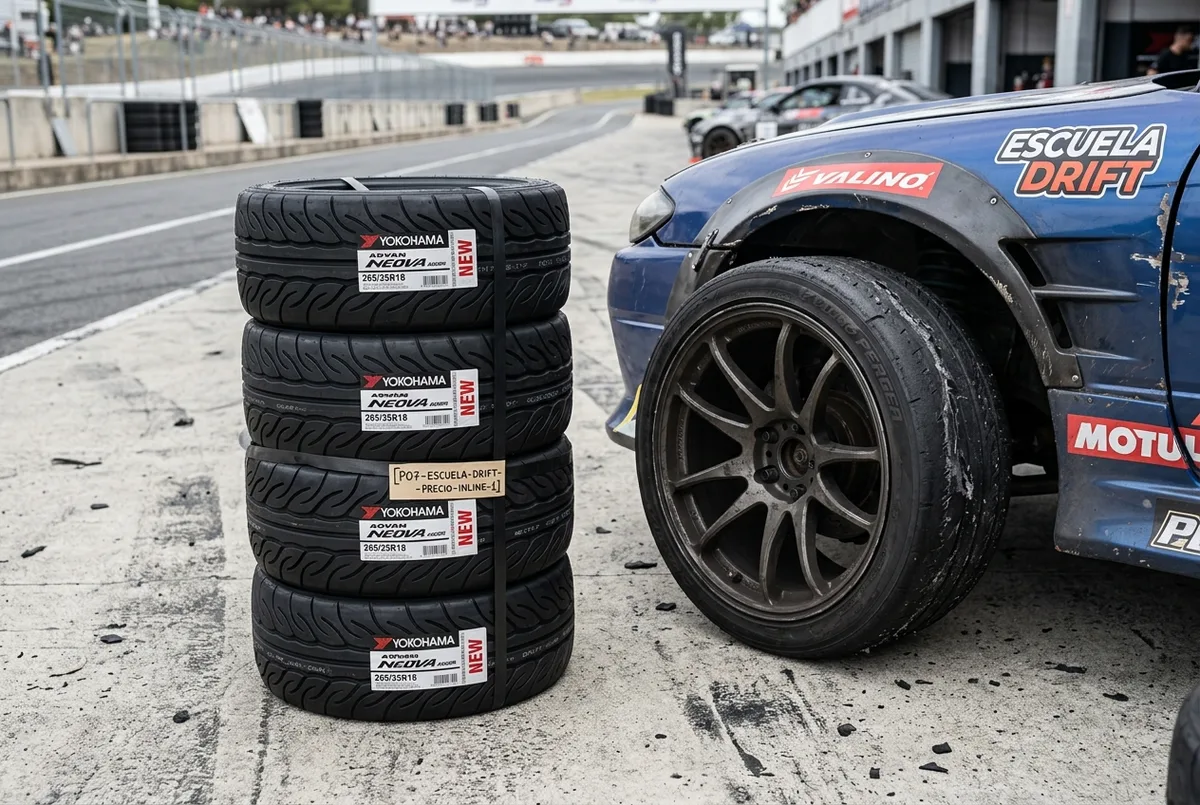
Then come the rest of the costs that you do not see but are there:
- Hourly track rental. Drifting is legal only at a circuit or closed track, and those hours are paid for. It is not a free lot.
- The prepared car. A RWD BMW E36 328i with a locked differential, dialed-in suspension and the right tires for this is not a street car: it is a work tool that breaks, gets maintained and gets replaced.
- The instructor. A professional with experience who rides shotgun beside you the whole time, guiding you, correcting you and able to take control if needed, is not cheap labor. It is what lets a first-timer slide in a controlled environment, with the risk managed in layers.
- The safety gear. Helmet, fire extinguisher per regulation, and a closed private track with no other cars or traffic: it all has its standard. It gets met, not improvised.
Add all that up and the 300 to 500 USD range for a class with the car included stops looking expensive: it is what doing it well and safely costs. Cheap, in drift, almost always means someone cut corners on safety or on rubber.
The price spectrum in Argentina: your three paths
When you search "how much does it cost to learn to drift" there are actually three different paths, with very different prices and trade-offs. It pays to see them side by side before choosing.
1. DIY: buying and preparing your own car
It sounds like the cheapest option and it is almost always the opposite: a false economy, especially to start. A used RWD car, plus the locked differential, dialing in the suspension, spare tires and the maintenance of something you will break while learning, goes well above any course. And that is without counting that you have nobody beside you teaching: you will burn rubber and money making the mistakes an instructor corrects in five minutes.
DIY makes sense when you already know how to drift and want your own car to keep practicing. As an entry point it is expensive, slow and, unsupervised, dangerous.
2. Open track day: cheaper, but you bring everything
A track day or "open day" at a circuit costs quite a bit less than a class with the car included, for a simple reason: you only pay for track access. You bring the car, you supply the tires, and there is no one-on-one instruction. It is the right option when you already have a prepared car and experience, and you only need track hours.
For someone just starting out, the track day does not solve the underlying problem: you still need a prepared car and someone to teach you. The low price is real, but it does not include what a beginner needs most.
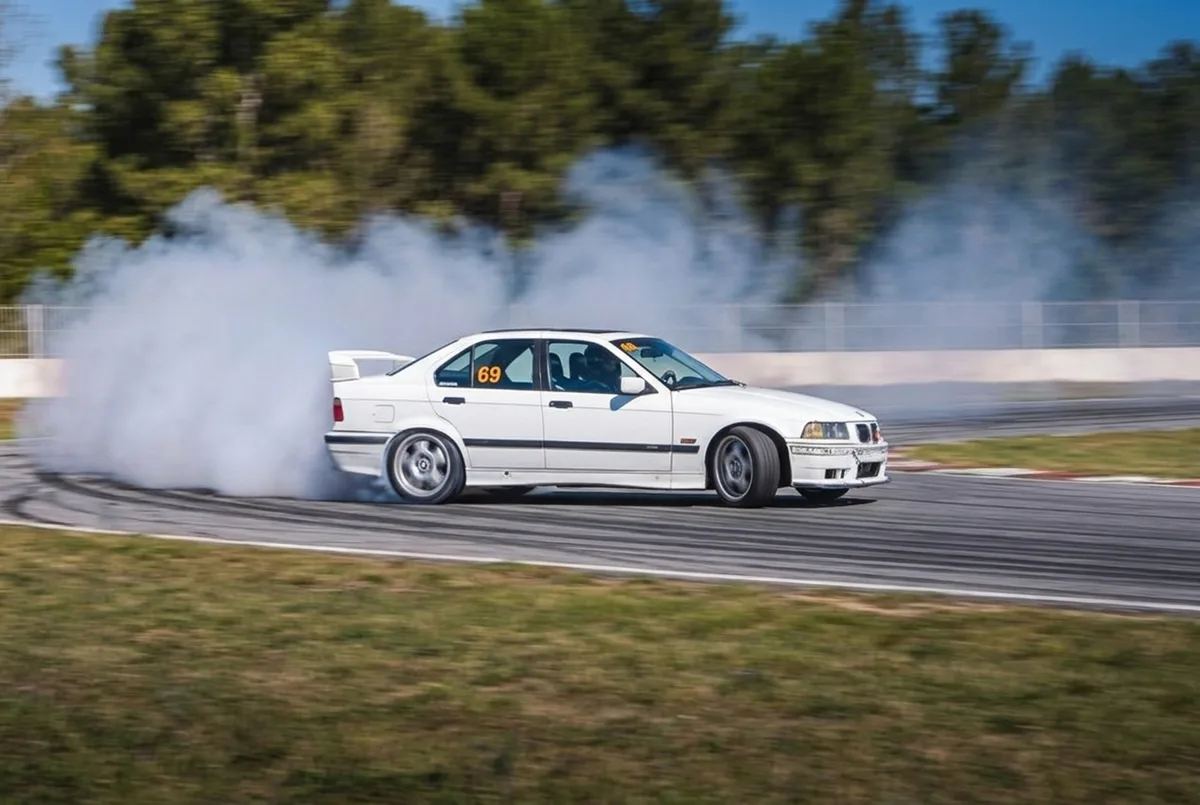
3. School with the car included: everything handled
It is the most direct path to start from zero. You pay a fixed price and arrive empty-handed: the car, the track, the instructor, the helmet, the tires and the fuel are already there. It is more expensive per minute than a track day, but it saves you the huge investment of buying and preparing a car just to find out whether drift is your thing.
Here the range is the one we mentioned: 300 to 500 USD for a single class depending on duration, and around 2000 USD for a 5-session course. It is the option we use as a reference in this article because it is the only one that does not require you to have anything beforehand.
What you should expect included in the price
A "car included" price does not mean the same thing everywhere. Before paying, check that the number really covers everything you need to get in and drift without surprises. At a serious school it should include:
- The prepared car — RWD, locked differential, ready to slide (in our case, a BMW E36 328i).
- The track — circuit or closed private track, with the contract and authorization handled by the school.
- The one-on-one instructor — a professional riding shotgun beside you the whole time, who guides you and can take control if needed.
- The safety gear — helmet and fire extinguisher per regulation, at no extra cost.
- The consumables — tires and fuel included. If they charge you for rubber separately, the "cheap" price was not so cheap.
If an offer is noticeably cheaper than the range, it is almost always because something on this list is not included — and it is usually the rubber, the safety gear or the quality of the instructor. Always ask what is in the price before comparing numbers.
What it really costs to start
If what you want is the exact number for each format — the introductory class, the longer experience and the full course, with their durations and payment methods — that lives on our drift class price page in Buenos Aires. The full tariff is there in detail, without us having to repeat it here.
For the full picture of how the school works, there is our drift school in Buenos Aires. And if you are still comparing options, how to choose a drift school can help you not go wrong with who you spend your money on.
The practical conclusion: a class with the car included is the smallest possible investment to learn whether drift is for you, before getting into the economics of DIY. A 5-session course is what takes you from your first slide to actually controlling the car.
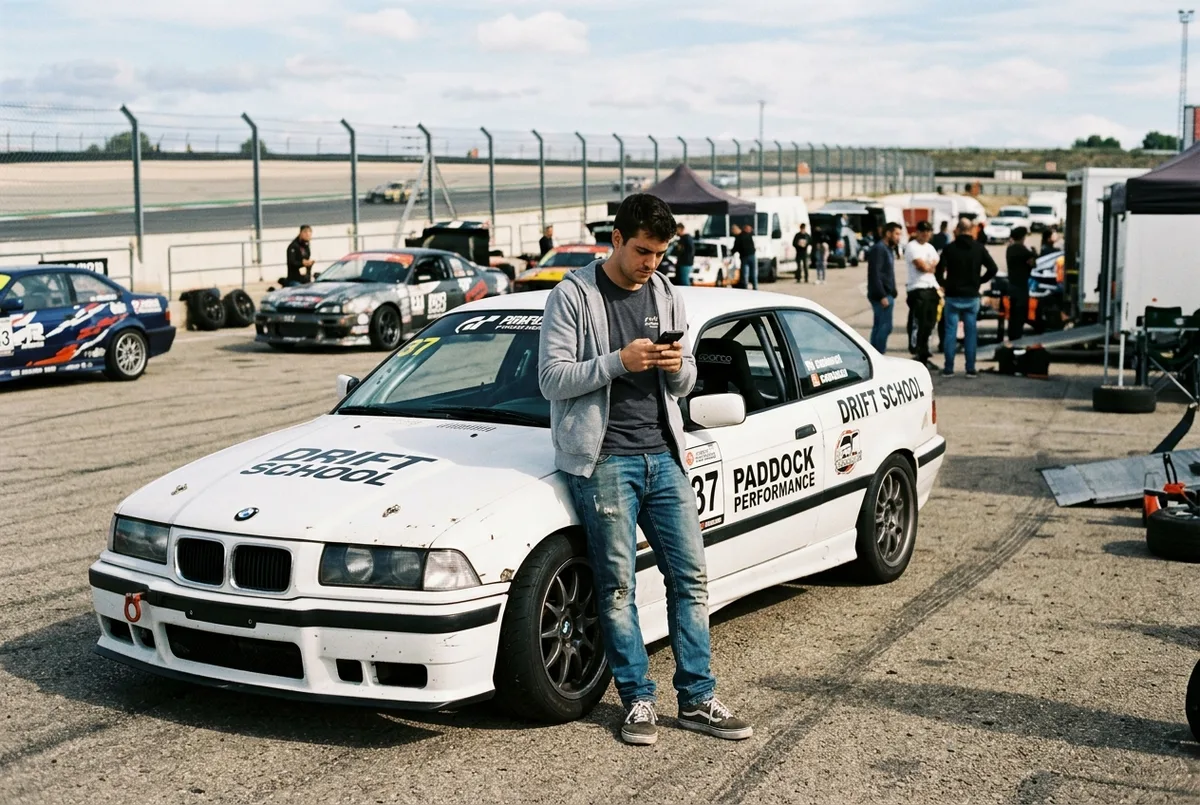
Book your drift class here or message us directly on WhatsApp +54 9 11 6833-3342 and we will give you the exact price and coordinate a date. The track is in the outskirts of Buenos Aires.
Frequently Asked Questions
How much does a drift class cost in Argentina?
A single class with the car included runs around 300 to 500 USD depending on duration and what it includes, and it covers the BMW E36 328i, the instructor, the helmet, the tires and the fuel. A 5-session course is around 2000 USD. For the exact number of each format, see our per-class price page or message us on WhatsApp +54 9 11 6833-3342.
Why do prices vary so much?
Because there are three different paths: an open track day (track access only, you bring your car) is the cheapest; a class with the car included (car, track, instructor, rubber and fuel) is mid-range; and a full course is the biggest investment. The cost is driven by rubber — a rear set runs 200-300 USD and you burn 1-2 per session — plus track rental, the prepared car and the instructor.
Is it cheaper to buy my own car?
To start, almost never. Buying an RWD car, locking the differential, dialing in the suspension and replacing tires goes well above a course, and without an instructor you will spend money making avoidable mistakes. DIY makes sense when you already know how to drift and want your own car; as an entry point it is a false economy.