How to Choose a Drift School: 7 Things to Check Before You Book
 By Dmitrii McCarthy
Why choosing the right drift school matters so much
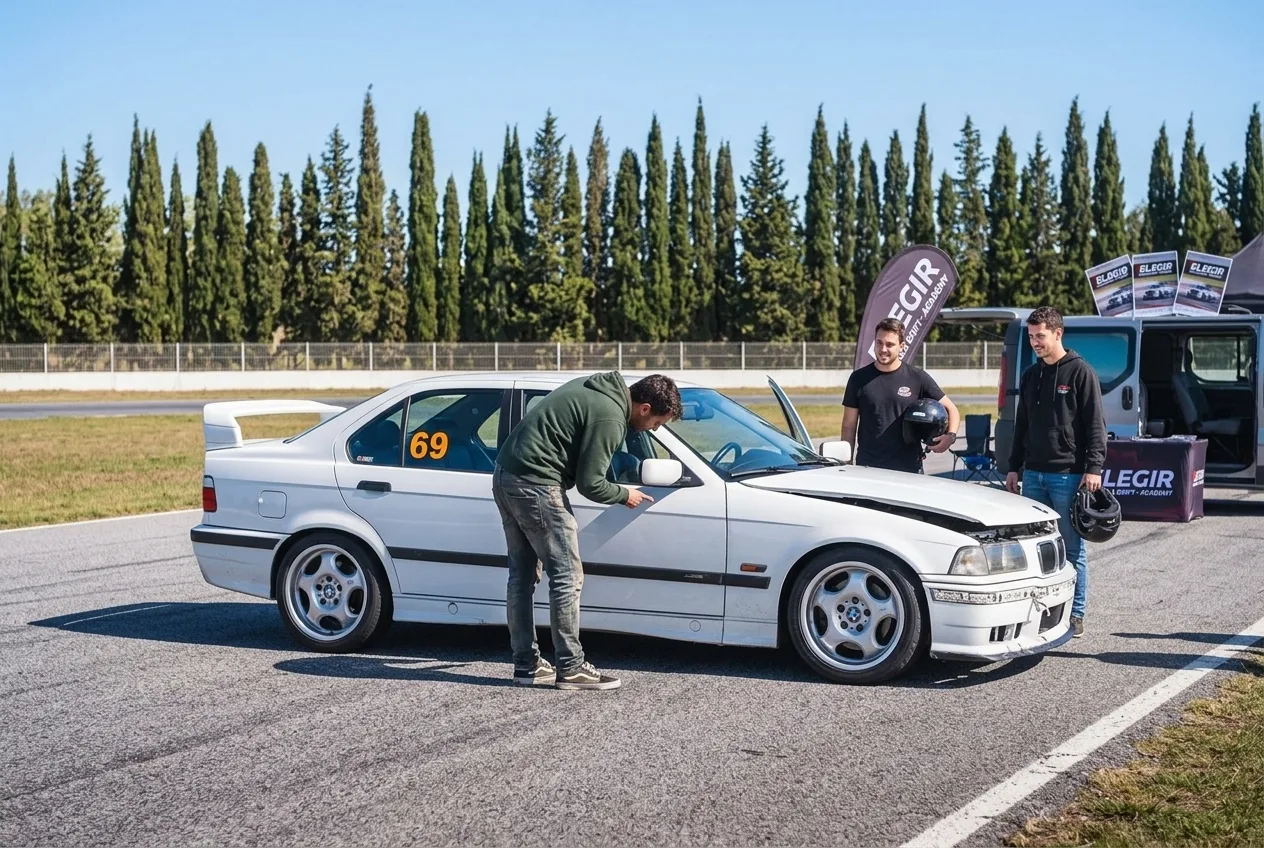
Drifting is one of the most fun things you will ever do in a car, but it is also an activity where the gap between a serious school and an improvised one is paid in three ways: in safety, in money, and in whether you actually learn anything. Choosing badly is not just a wasted afternoon — it is getting into a car that is not prepared, with someone who cannot correct your mistake in time, in a place where a slide that gets away ends badly.
The good news is you do not need to be an expert to vet a school. There are 7 concrete things you can check and ask before paying, and that filters out almost everything. This guide is for you to use with any school you are evaluating — it is not a "pick us". At the end we tell you in one line how we tick them, but the checklist works just as well to compare whoever you like.
A market note to calibrate expectations: drift schools with the car included in Argentina start around 300 USD for an introductory class. If you see something far cheaper, the first thing to ask is what they are cutting — and the answer is usually in one of the 7 criteria below.
The 7 criteria to vet a drift school
In order of importance, from what matters most to least. Each criterion comes with the concrete question to ask before booking.
1. Is a prepared car included, or do you bring your own?
This is the first fork and the one that defines the most money. Some schools ask you to bring your own car; others include a car prepared specifically for drift. For a first-timer, the second option is the only sensible one: a drift car is not a street car with the tire pressure lowered. It runs rear-wheel drive, a locked differential, dialed-in suspension and tires made for this.
What to ask: "Is the car included and prepared for drift? Is it rear-wheel drive with a locked differential? Does it have dialed-in suspension and tires made for this?". If the answer is "bring your own", know that you are taking on all the risk and cost of destroying your own car. For reference, we use an RWD BMW E36 328i, with torque to spare to break the rear loose, prepared for drift: a locked differential, dialed-in suspension and tires made for this.
2. Closed track or circuit — never the street
This is non-negotiable. Drifting is only legal and safe at an authorized circuit or a closed private track. If a "school" offers you practice in a lot, an empty avenue at dawn or any public space, it is not a school: it is someone exposing you to criminal charges and to a crash with no run-off areas.
What to ask: "Where exactly is the class held? Is it a circuit or a closed private track?". A vague or evasive answer is an immediate red flag. We work at El Picódromo, a closed private track at Av. Olimpo 80, Esteban Echeverría (south of Greater Buenos Aires), with a layout prepared for drift and run-off areas: see it on Google Maps.
3. 1-on-1 instructor with real competition experience
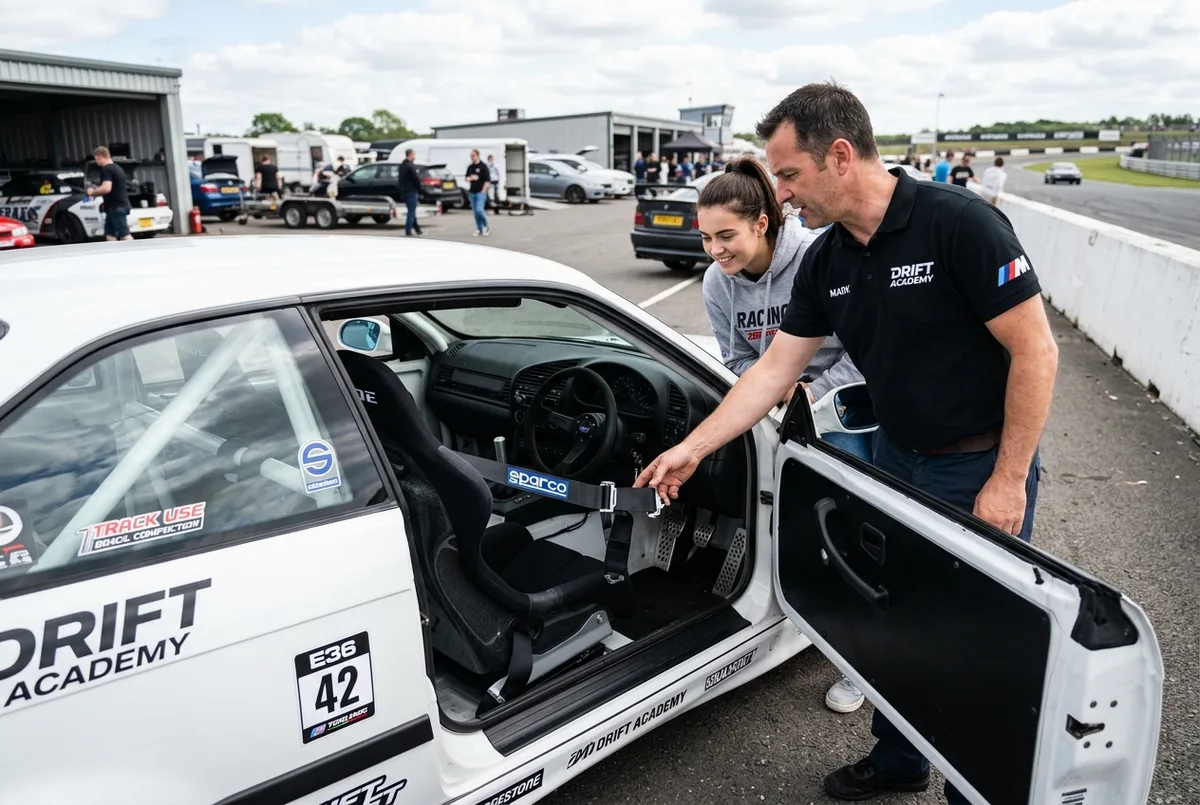
Drifting is counterintuitive: your street instinct works against you. You need someone beside you who can correct in real time, not instructions by radio from a pit box. And "instructor" is not just anyone who can slide for a camera: you want someone with real, ideally competition, experience who corrects you lap by lap.
What to ask: "Does the instructor ride with me, one-on-one? Do they have competition experience? Do they correct me in real time, lap by lap?". That last point is key: the instructor has to sit beside you and correct you in the moment, not watch you from outside. In Argentina there has been an active drift competition scene for years, so asking for real experience is not asking too much. Our instructors ride shotgun beside you on every lap, guiding you and correcting you.
4. What the price covers — the detail that separates serious from improvised
This is where the surprises show up. Drift is expensive to run because it burns real things: a set of rear tires costs between 200 and 300 USD in Argentina, and one drift session burns 1 to 2 sets. Add the hourly track rental, the fuel, the instructor and the safety gear that has an expiry date. A serious school includes all of that in the price; an improvised one charges you cheap and then bills the tires separately, or rations them.
What to ask: "Does the price include tires, fuel and helmet? Are there extra costs not in the published price?". If the tires are not included, you are looking at a fake price. Our class includes the car, a certified competition helmet, tires and fuel, with no hidden extras.
5. Is there cover and safety on track?
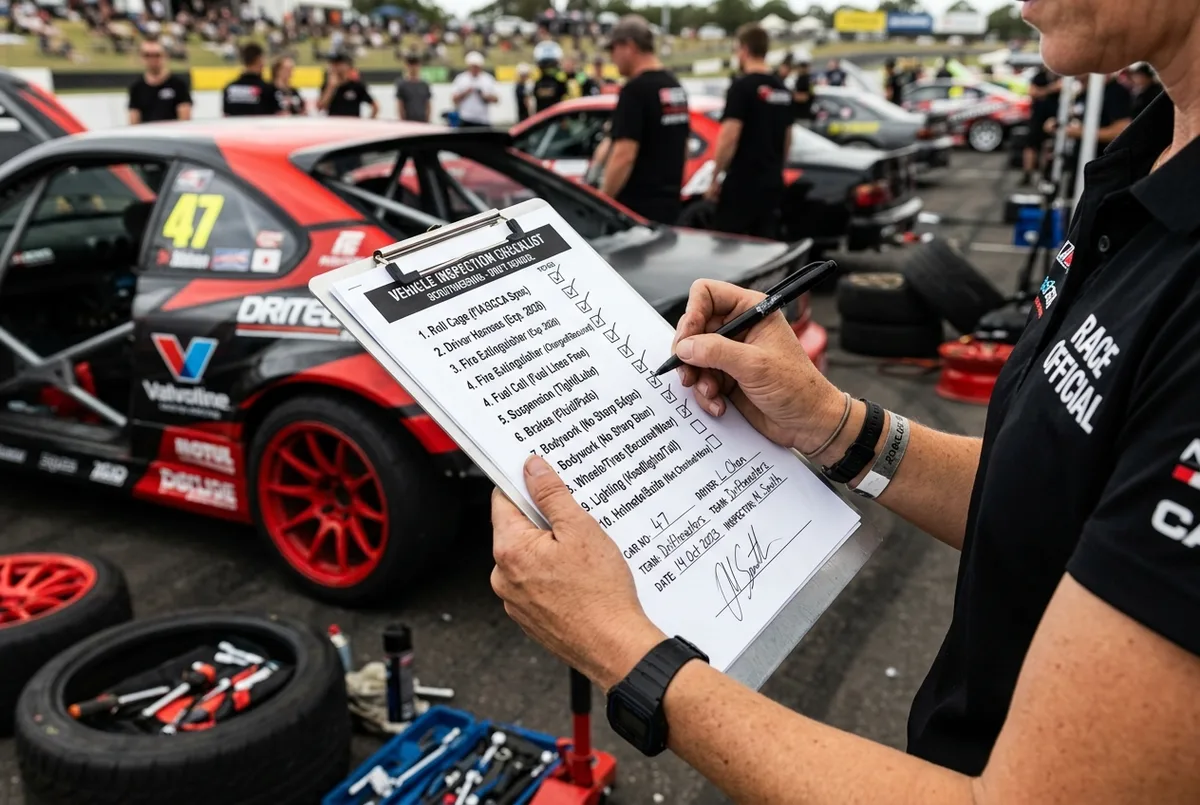
A serious school does not improvise safety. Beyond the closed track and the prepared car, there has to be a framework of cover and protocol on track: what happens if something goes wrong, who responds, how the activity is organized. They do not need to recite policies — but if the question makes them uncomfortable or the answer is "nothing happens, relax", be suspicious.
What to ask: "How is the activity covered? What happens if there is an incident on track?". You want a clear answer and a protocol, not a shrug. In our case we say it plainly: there is no track insurance (it is not sold in Argentina for this); the mechanism is a contract you sign before getting in. Safety done right shows in the details: a private, closed track with no crossing traffic, a professional instructor beside you on every lap, a helmet, a fire extinguisher per regulation, and moderate speeds that start slow and build at your pace.
6. Structured progression, not a one-off ride
There is a difference between an experience to scratch the itch once and a school that teaches you to drift. Both are valid — it depends on what you want — but you have to know which one you are buying. If your goal is to really learn, you want progression: that the first class leaves you initiating and holding a slide, and that there is a clear path to keep advancing.
What to ask: "In the first class will I already drift or is it just a passenger ride? Is there a program to keep progressing afterwards?". We have a 30-minute Drift Intro to try it, a 60-minute Drift Experience with intermediate techniques, and a 5-session Pro Driver Course for those who want to progress seriously.
7. Price and booking transparency
The last one is the simplest to check and the most revealing. A serious school tells you the full price, which payment methods it accepts, and what happens if you have to cancel. An improvised one dizzies you with "it depends", asks for everything upfront without explaining anything, and has no cancellation policy. Booking transparency is a proxy for how they will handle everything else.
What to ask: "What is the final price, how is it paid and what happens if I cancel?". We are direct: a 50% deposit by bank transfer locks in your spot, and the balance takes a minute on class day — cash (USD or pesos), a transfer at the day's P2P rate, or USDT — same price whichever way you pay; within 10 calendar days of purchase, giving 24 hours notice before the class, you have a withdrawal right with a full refund (Argentine Law 24.240, art. 34); outside that window, free date change up to 48 hours before the class — your payment moves to the new date you choose; with less than 48 hours notice the payment stays reserved and can be used within the next 30 days; it is not refunded because the slot was reserved for the whole period; and the voucher is valid for 12 months. No fine print.
Red flags: when to walk away
If, after asking the questions above, any of these come up, do not book:
- They offer the street or a public lot instead of a circuit or closed track. It is illegal and unsafe, end of discussion.
- There is no cover or safety protocol, or the question makes them uncomfortable.
- The "instructor" has no real experience and cannot correct your mistake from the car, or does not ride with you one-on-one.
- The price is opaque: it does not include tires, extras appear afterwards, or there is no clear cancellation policy.
- The car is not prepared for drift, or they ask you to bring your own as the only option without warning you about the risk.
Any one of these alone is enough reason to look elsewhere. Drift done right is a controlled environment where the risk is managed in layers — a closed track, an instructor beside you, a helmet, a fire extinguisher and moderate speeds — and the difference is precisely in these details.
How we do it
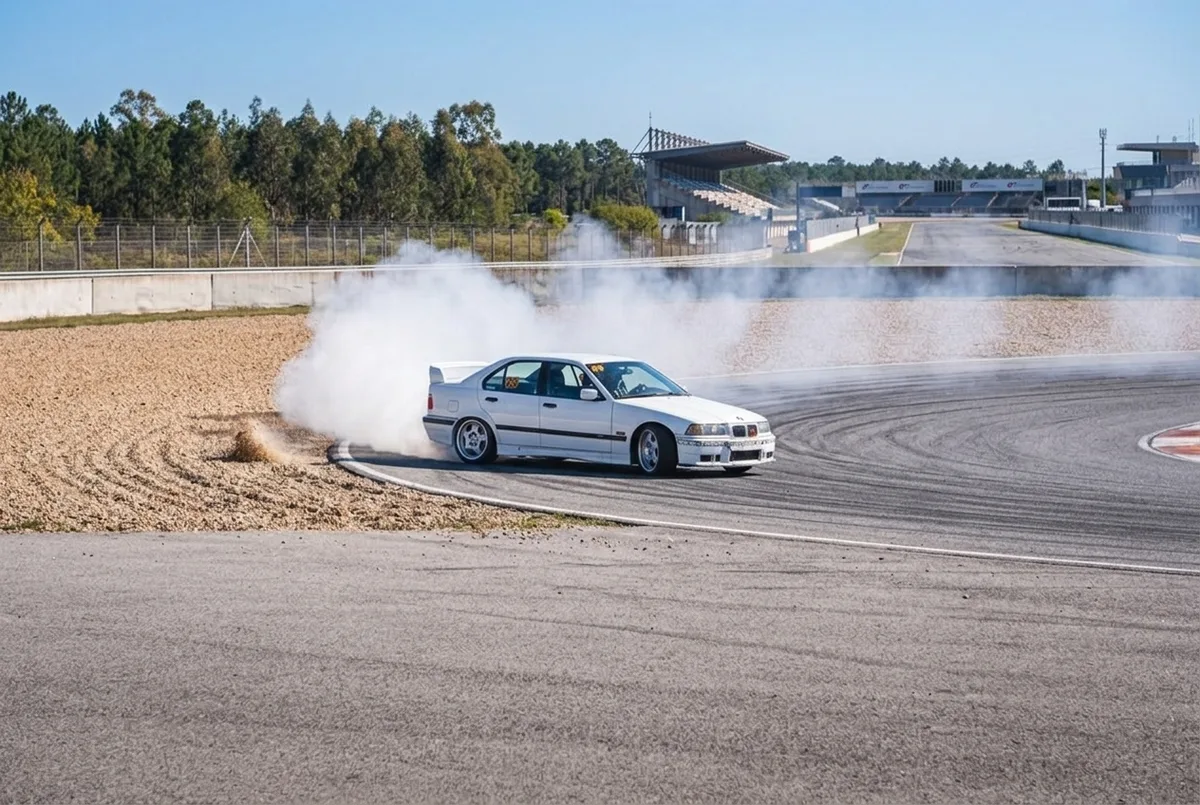
We do not want to turn this guide into a brochure, so we will keep it short: we tick all 7 criteria. A prepared car included (BMW E36 328i RWD, prepared for drift: a locked differential, dialed-in suspension and tires made for this); a closed private track (El Picódromo, Esteban Echeverría); a professional instructor riding shotgun beside you on every lap, who guides you and corrects you; a price that includes tires, fuel and helmet; a fire extinguisher per regulation and moderate speeds that start slow (there is no track insurance: the mechanism is a contract you sign before getting in); progression from the Drift Intro to the Pro Driver Course; and transparent booking with a 12-month voucher.
If you want the detail of each thing, it is all broken down in the guide to our drift school in Buenos Aires. And if what you are comparing is money, see how much a drift class in Buenos Aires costs and how much a drift school in Argentina costs to understand what you are paying for in each case. On the most common doubts, we have whether drifting is dangerous and how we handle safety and what happens if I break the car in a class.
If you have a specific question while comparing, write to us: send us a WhatsApp at +54 9 11 6833-3342 and we will answer any of the 7 points straight. You can also see everything at driftschool.com.ar.
Frequently Asked Questions
How do I know if a drift school is trustworthy?
Vet the 7 criteria: a prepared car included, a closed track or circuit (never the street), a one-on-one instructor with real experience, a price that includes tires and fuel, a clear answer on cover and safety, structured progression and transparent booking. If they all give clear answers, it is serious; if they dodge any of them, be suspicious.
What should the price of a drift class include?
At a minimum: the prepared car, a certified helmet, tires and fuel. Tires are key because a rear set costs 200-300 USD and one session burns 1 or 2 sets. If the tires are not included, the price you saw is fake.
Is it safe to learn to drift on the street?
No. Drifting on the street is illegal in Argentina and dangerous: there are no run-off areas, there is traffic, poles and pedestrians, and you risk having your car seized and facing criminal charges. A serious school only operates at a circuit or a closed private track.