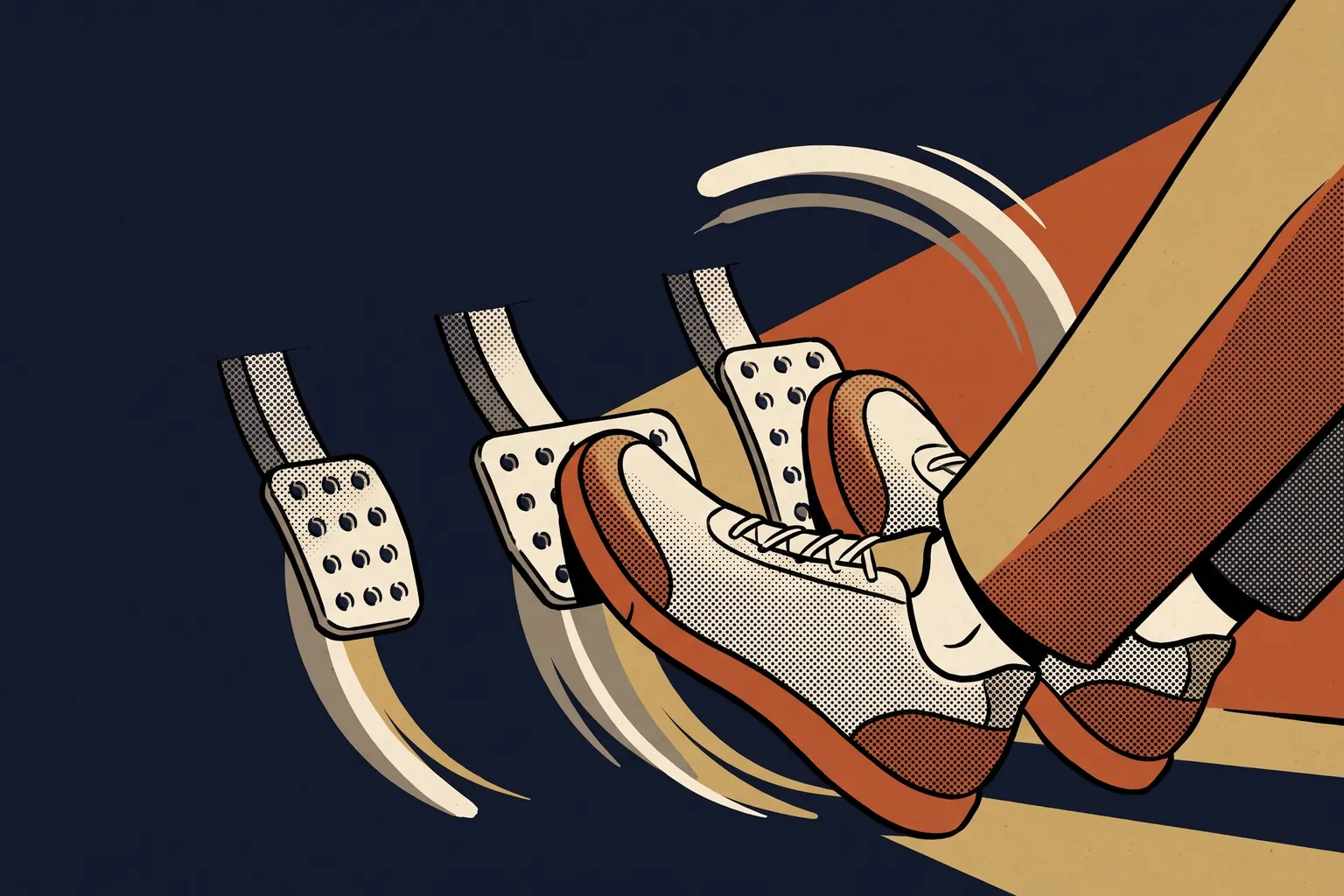
- Can I brake with my left foot in an automatic car?
- Argentina’s National Traffic Law 24.449 does not say which foot you brake with, but the licence manuals that cover the pedals teach moving the same foot from the accelerator to the brake. Left-foot braking is a track technique: if you want to learn it, do it at a karting track or on a closed circuit.
- Why shouldn’t you brake with your left foot?
- On the road, because a foot used to the clutch tends to brake abruptly, because it confuses people who switch between automatic and manual cars, because with one foot on each pedal you can press both at once, and because a foot resting on the brake can leave the brake lights on. On a track, though, it is a normal technique.
- What does left-foot braking mean?
- Using the left foot for the brake and keeping the right foot only for the throttle. It saves the right foot’s trip between pedals and lets you manage the car’s weight without lifting off the throttle. It is used in karting, in rally and in race cars without a clutch pedal.
- What is heel-toe and what is it for?
- It means braking with the front of the right foot and, with the side of the same foot, blipping the throttle while the left foot presses the clutch to downshift. It lets the lower gear go in without a jolt before a corner and leaves the engine at the right revs for the exit.
- Do racing drivers brake with their left foot?
- It depends on the car. In karting and in cars without a clutch pedal, such as Formula 1 cars, yes. In rally it is very common, especially with front-wheel drive. With a manual gearbox the left foot works the clutch and heel-toe is used to downshift while braking; some drivers downshift that way and then switch the braking to the left foot.
- Do you brake with your left foot in a drift class?
- In the TROMPO BMW E36 the left foot works the clutch, because it is a manual car: the right foot handles throttle and brake. You do not need left-foot braking for your first slides, and the instructor sits beside you for the whole class.
 By Dmitrii McCarthy