Do I Need Experience to Drift? No — the method starts from zero
 By Dmitrii McCarthy
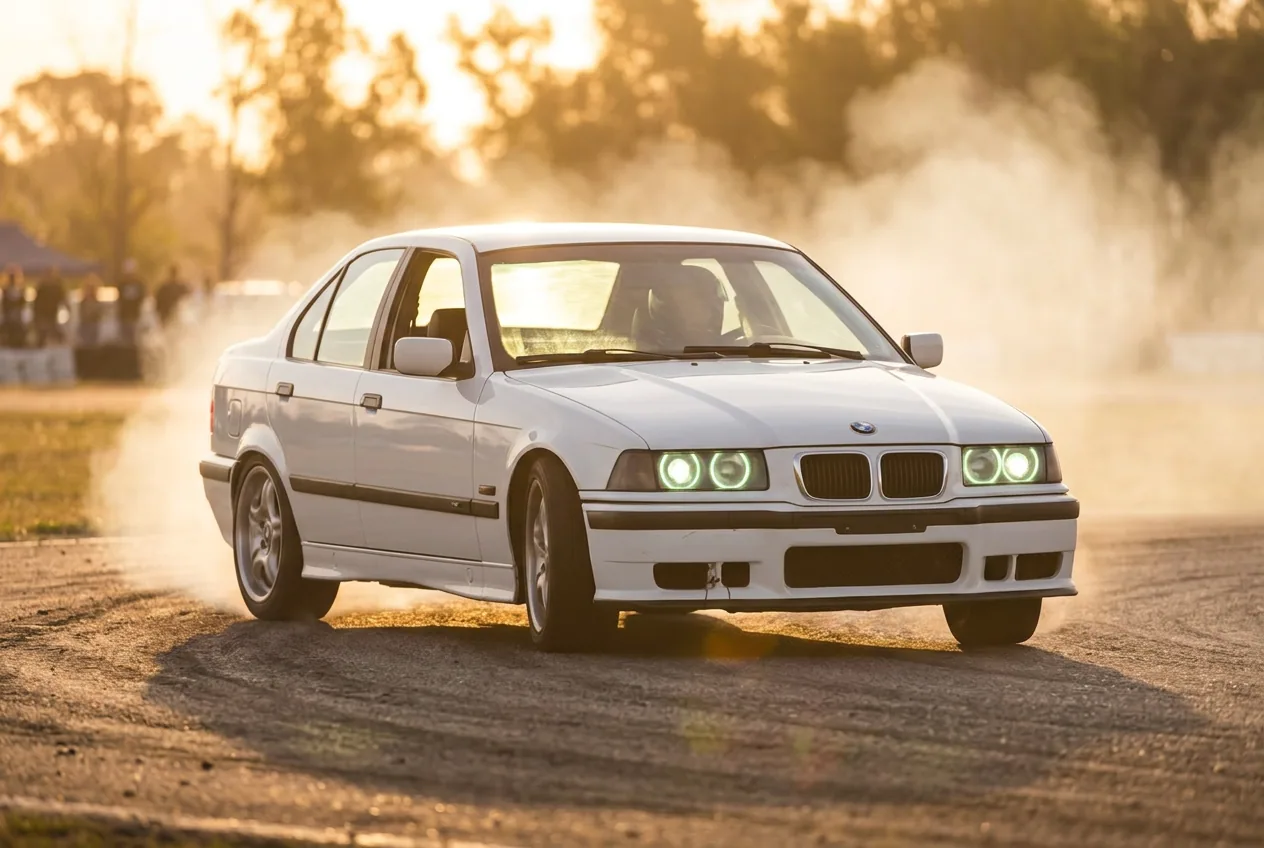
Do I need experience to drift? The short answer is no
It is the question that stops almost everyone before their first class: "what if I've never drifted, never even driven on a track — am I going to embarrass myself?". The honest answer is no, you do not need experience to drift. It is not a requirement hidden in the fine print: the entire method is designed so you start from zero. The vast majority of the people who come through arrived exactly like that — having never drifted at all.
Drift looks impossible from the outside because all you have seen are videos of advanced drivers flat out. But those drivers also had a first day when they knew nothing. The difference is the method: with a professional instructor beside you, in a prepared car, on a closed track, the learning curve is far shorter than you imagine. Most people manage to initiate and hold their first controlled slide within the first minutes in the car.
In this article we explain what "no experience" means concretely, what the instructor does for you, what the real minute-by-minute curve looks like, whether what you already know helps (karting, simulator, video games), and what happens if you feel like a terrible street driver. Spoiler: a controlled track is easier than traffic.
What "no experience" means here
When we say you do not need experience, we mean it seriously and at every level. "No experience" covers people who:
- Have never driven on a track or a circuit.
- Have no idea how a slide is initiated.
- Have never touched a prepared rear-wheel-drive car.
- Maybe do not even drive a manual gearbox comfortably.
All of those cases qualify. There is no skill floor you have to reach before coming. The only thing we ask is that you know the basics of a manual — start, brake and change gear without stalling the car — because the instructor builds everything else on that base. If the manual gearbox is your specific worry, we cover it separately in if I can't drive a manual, can I drift.
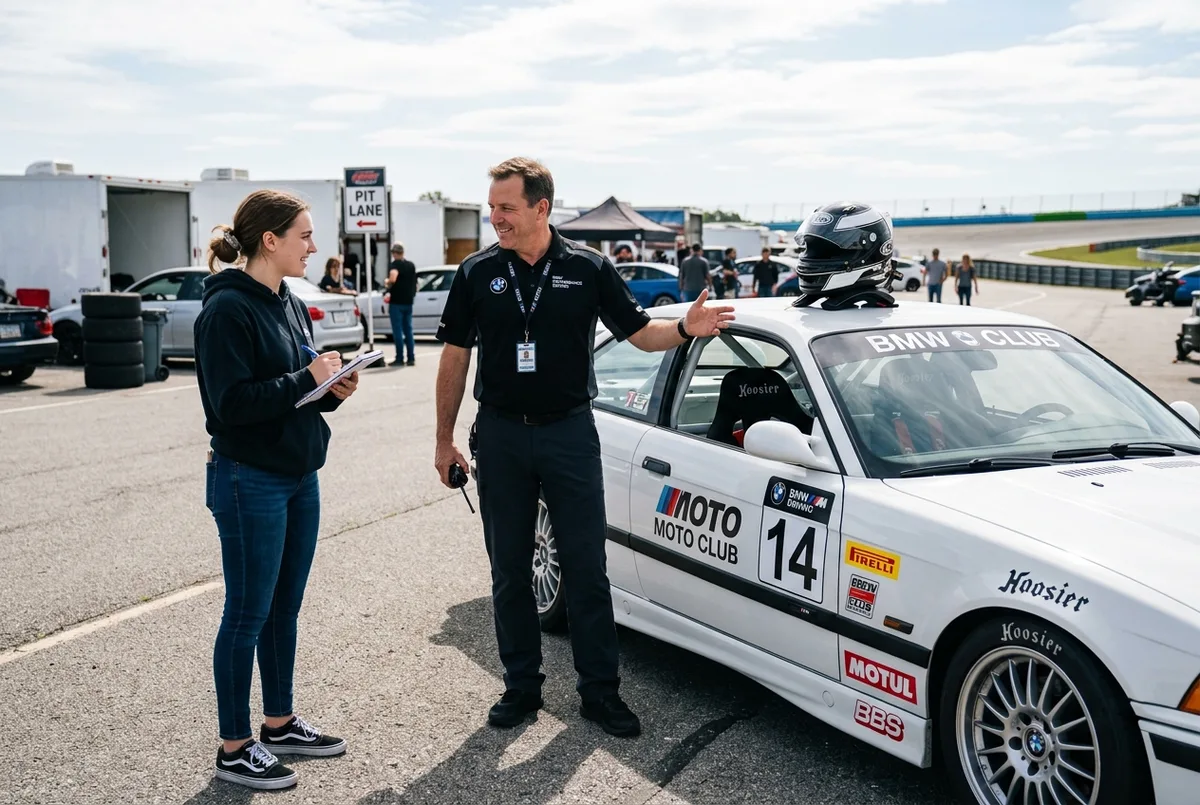
And so it is clear where the confidence comes from: the vast majority of the people who come through arrived having never drifted. It is not about luck: the system is built so an absolute beginner can drift with an instructor beside them, in a controlled environment where the risk is managed in layers. Let's see how.
What the instructor does for you
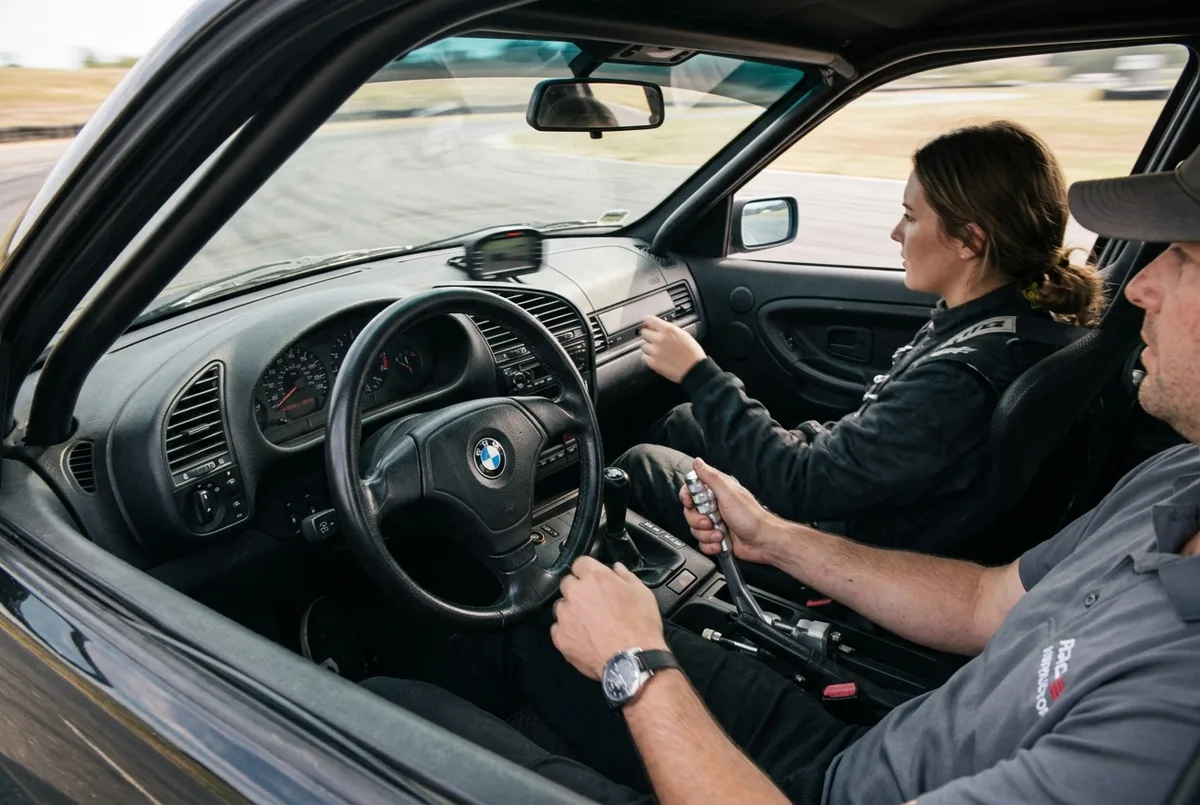
The key to being able to start from zero is that you are never alone in the car. The professional instructor sits in the passenger seat, one-on-one with you, for the entire session. He is not a guy watching from the pit lane: he is literally beside you, reading what the car does before you do and telling you what to do in real time.
He guides you step by step: when to turn, when to give gas, when to counter-steer. At first the two of you practically "drive together" — you execute and he corrects instantly. As you get the hang of it, he lets you do more and more. There is no exam to pass, no admission test: it is a class, not a test.
And on the track you are not alone: the instructor is beside you on every lap, corrects you instantly and tells you what to do at every moment. That is why a total first-timer can push the throttle from the first class. It is not that "we trust you'll get it right": you start slow, at 20-50 km/h, on a private, closed track, with a helmet, a fire extinguisher per regulations and the instructor beside you.
The real learning curve
Forget the idea that you will spend the whole class going in circles understanding nothing. The progression is fairly predictable and faster than you think. Broadly, here is what a first session looks like:
- First 10 minutes: briefing and first laps. The instructor explains the posture, where to look, how to meter the gas. You start to feel how the rear end reacts.
- Around 20 minutes: you are already initiating slides with help. Short, assisted, but real slides. That is where almost everyone's grin appears.
- Toward 30 minutes: you hold longer slides and start to link them. You won't come out being Ken Block, but you will have actually drifted, with your own hands.
Remember that drift is not a speed race: you work at 20-50 km/h, not flat out. That hugely lowers the sense of danger and lets you focus on technique. If you want the minute-by-minute detail of what a first class feels like, we tell it in full in your first drift class: what to expect.
Does my karting, simulator or video games help?
Many people arrive having played hours of simulator or drift video games, or with karting experience, and wonder if it counts. The answer is: some of it transfers, but less than you think, and none of it is a requirement.
What does help: visual references. If you have played a lot, your eye is already used to reading a corner, anticipating the turn-in point and understanding that the car rotates. That "track reading" starts a step higher. Karting also leaves you a notion of line and of searching for the limit.
What does not transfer: the physical feel. No simulator gives you the real G-forces you feel when the car genuinely rotates, nor the weight of the clutch and steering of a prepared car. The fine coordination between gas, handbrake and counter-steer is learned in the car, with your body, not with a joystick. That is why an expert gamer and someone who has never touched a wheel end up, in the first class, more alike than you would expect.
If you come from video games or the sim and you are itching to know how much it really helps, we compare it in detail in real drift vs karting vs simulator.
What if I'm a terrible normal driver?
This is many people's secret fear: "I drive badly on the street, I get nervous in traffic, I'm surely a danger on track". Relax: a controlled track is not traffic, and in several ways it is easier.
On the street what stresses you is the unpredictable — the one who cuts across, the pothole, the bus that brakes, the pedestrian. On a closed track none of that exists: no crossing traffic, no surprises, wide gravel run-off margins instead of concrete curbs. Your only job is the car and what the instructor beside you says. For many people who feel clumsy on the street, the track is exactly where they relax at the wheel for the first time.
Add that the car is a work tool, not a fragile collector's car: it is a BMW E36 prepared specifically for this — locked differential, dialed-in suspension and the right tires — with a stock, tidy cabin: factory seats and factory seatbelt. You are not wrecking "your" car or anyone's. You wear a homologated full-face helmet, there is a fire extinguisher per regulations, and the instructor is beside you on every lap, guiding and correcting you. It all happens on a private, closed track with no other cars or traffic. The whole system is built so an absolute beginner learns with the risk kept in check.
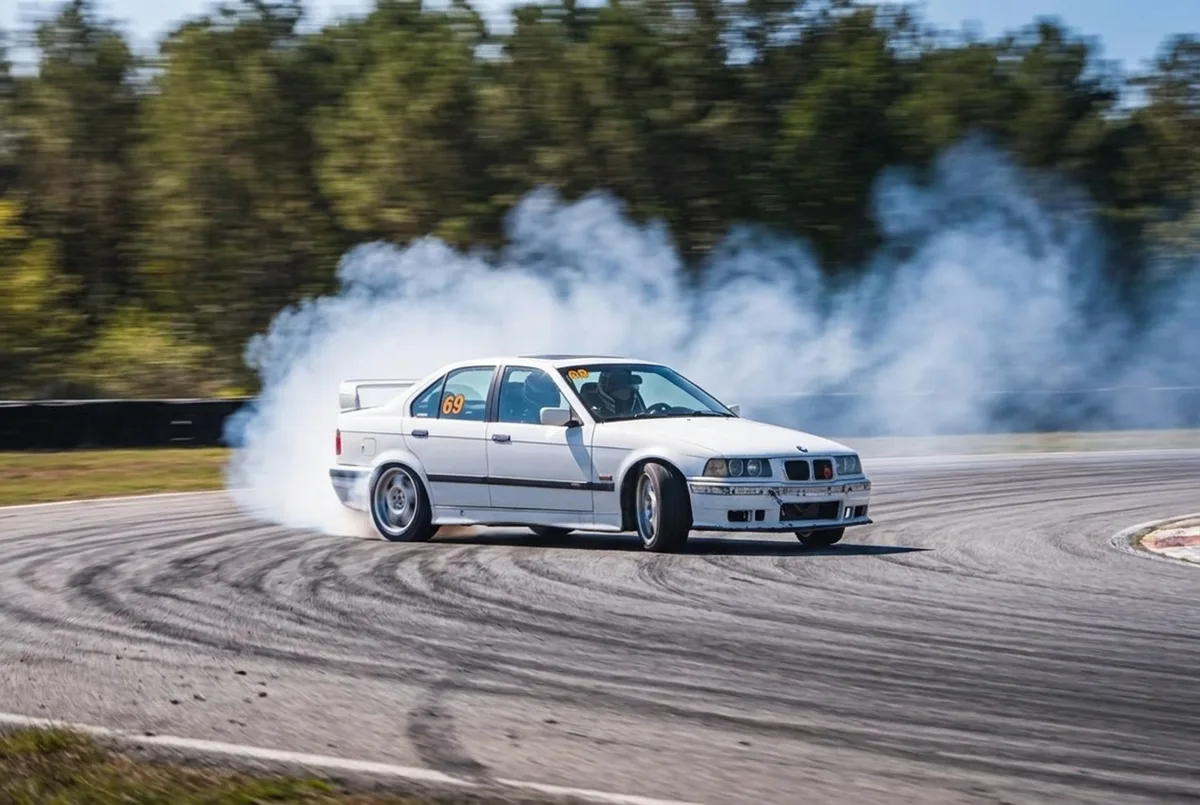
So if the only reason you have not booked is "I don't have experience", that reason does not exist. You are exactly the person the first class is made for.
How to start from zero today
The path is simple. The Drift Intro lasts 30 minutes, costs 300 USD and includes everything: the prepared BMW E36, the professional one-on-one instructor, the homologated helmet, the tires and the fuel. You do not need to bring anything but comfortable clothing — long trousers and closed thin-soled sneakers — and to have eaten light beforehand. You also do not need a driver's license, because it is a closed private circuit, not public road; a DNI or passport for the track contract is enough.
If you get hooked after the first one, the 60-minute Drift Experience adds more track, and the 5-session Pro Driver Course is for those who want to progress seriously. But to answer this article's question — do I need experience? — the Drift Intro is more than enough.
To keep reading: drift course for beginners lays out the full picture of how learning works step by step, and the pillar guide how to learn to drift in Buenos Aires connects the whole journey. You can also see the TROMPO homepage for prices and availability.
Message us on WhatsApp and start from zero — or save the direct number: +54 9 11 6833-3342. We coordinate a date (Monday to Thursday), the track is El Picódromo in Esteban Echeverría, south of Greater Buenos Aires (see it on Google Maps), and the first slide is yours to make.
Frequently Asked Questions
Do I need to know how to drive a manual to drift?
Yes, the basics: start, brake and change gear without stalling the car. The instructor builds everything else on that. If the manual gearbox is your only doubt, we cover it in if I can't drive a manual, can I drift.
Will I really be able to drift in 30 minutes?
Yes. Most people initiate and hold their first controlled slide within the first minutes, and by the end of the 30 they are already linking longer slides with the instructor guiding from beside them.
What if I can't get the slide right?
There is no "can't get it" because the instructor guides you in real time and corrects instantly. At first the two of you practically drive together and he lets you go more and more as you get the hang of it. There is no exam to pass.
What if I learn slowly?
Nothing happens. Everyone advances at their own pace and the instructor adapts the plan to yours — that is why it is one-on-one. The class cannot be "failed". If you want more time, you can move up to the 60-minute Drift Experience or the 5-session Pro Driver Course. Any specific question we coordinate via WhatsApp at +54 9 11 6833-3342.